With technology growing and changing each day, it's a no-brainer how important it is to able to keep up to date with it. In our current age, the simple press of a button has limitless possibilities. The answers to any question you could ever ask lie in the results of a simple Google-search. Google may not give us a direct answer all the time, but it points us to websites and articles that can.
Earlier today, the class I am a teacher's assistant in (a 10th-grader Modern World History Class) went to the computer lab to begin a short project. Since most teenagers have access to computers outside of school, or at least smart phones, it seemed that allowing them to use the computers for school would work for their advantage. However, many of the students seemed confused. They were stumped by something that I thought should come as a second-nature to them: finding information online. A simple Google search now turned into a game of search-and-find between. Well, who's to blame them when their searches were pulling up results from over a million websites?
In order to learn how to use Google as efficiently as possible, it's necessary to first understand how it basically works. Google is a search engine. It's not a calculator, nor is it a dictionary (although it does have really cool apps for both). It will never give you just one answer; Google simply alleviates the tedious task of searching the entire web for information. When you enter a search into Google, the words/numbers/symbols you use are processed and are used to find websites that have the same words/numbers/symbols, and are ordered by relevancy.
Another important factor in a Google search is word order. You can choose to have Google process a whole group of words as one whole factor. This means that instead of the words being searched individually, Google will search for websites with phrases that use those words in the same exact order. Along with that, I now have a reflex to never type a whole question into the Google search bar. Instead of typing up a whole sentence, only type up the main words that formulate the idea of your question. Adding extra words just broadens your search instead of narrowing it down. Common words (such as "and", "the", "but", etc.) are usually omitted from a Google-search, anyways, so including them is just a waste of time.
There are far more tips-and-tricks that can be used on your next Google-Search. You can do what I did, and just "Google it" to learn more.
Wednesday, December 5, 2012

Sunday, November 11, 2012
A Hero Fallen to the Depths of the Dark Side
“Better to rule
in hell than to serve in heaven” - Satan (Paradise Lost,
John Milton). Power is one of the factors that can either build us or
break us. It is something that can keep us on a route of progress, or
it can make us lose sight of much that is important to us, like
friends, causes, and ideas. An enemy that was once a friend was not
likely to have been coerced by fate into changing their ways. One's
journey to the dark side is often one enacted by his/her own hand, in
gradual increments. Destiny or fate, in my opinion, is just a label
that removes the blame of a fallen hero. Anakin Skywalker, later to
be retitled as Darth Vader, is a perfect example of a hero whom falls
victim to his own lust for power. He was lured into the traps of
Chancellor's influential lies, but he made the conscious decisions to
betray the Jedis and to aid the dark side for his own personal gain.
Anakin's greed and insatiable whims for power is one of the main
characters that pushed him along his path towards evil, along with
the Chancellor's manipulation, and if he had caught himself before
falling far too deep into the Sith state of mind, he could have
remained a hero.
Every person in the
world walks along the path of a hero and are bombarded with obstacles
and situations which require tough decisions to be made, even if
there is no possible outcome that is truly beneficial. Our strengths
and mentalities are influenced by people such as mentors, goddesses,
supernatural aids, and even the tests themselves. From the beginning,
Anakin is enangered by the lack of faith that the others have in him,
and takes this as being considered inferior by his fellow Jedi. Along
with this, he is puzzled and disturbed by a recurring dream he has of
the death of his wife, Padme. He slowly gives into the chancellor's
promises of strength and power in trade for Anakin going to the dark
side. However, before he is sure whether or not to go through with
crossing over to the dark side, he tells Mace Windu of the
Chancellor's disloyalty, which leads to an unsuccessful confrontation
of the Jedi to the Chancellor. The biggest mistake that Anakin made
was showing up right after Mace Windu had overtook the Chancellor in
a battle, and had already practically won. Not surprisingly, the
Chancellor once again sweet-talked his way into getting Anakin on his
side, and Anakin kills Mace Windu, becomes an ally to the Chancellor,
and is now dubbed “Darth Vader”.
Furthermore, it is
during this point that Anakin has crossed the threshold into the
dark side and is now working hand in hand with the Sith. His whole
perspective on good and evil is now warped by the point of view he
now sees, which is from the Sith side and not the Jedi's. However, he
proves to have much more power on this side, and is treated much
differently. He notably loses sight of anything that was important to
him when he was simply “Anakin” and not “Darth Vader”. His
wife, Although it wasn't necessarily intentional, Padame, whom was
one of the reasons he decided to joined the Sith, ends up dying by
Anakin's hand. This is ironic because Anakin pursued the power to
bring others back to life in order to revive Padame when the time of
her death were to come, but he instead kills her after obtaining
power. Along with this, Obi Wan Kenobi, who only shortly before was
considered Anakin's mentor and friend, is now simply viewed as
another battle that he must face. While battling Obi Wan Kenobi,
Anakin makes the argument that “from my point of view, the Jedi are
evil”, showing that his view of justice is now warped. This also
provides a parallel example to wars in real life, displaying how
different countries view each other, and are less likely to be
empathetic to their opposing side.
Moreover, there
were many changes that Anakin could have made in order to return back
to the Jedi he started out as. However, he is far too stubborn and
blinded by the benefits for power to even wish to return. The battle
between two enemies who once fought for the same side is a bitter
one. Obi Wan, Anakin's unchanged opposer, is more emotionally damaged
that confused by the change of circumstances. He puts into question
why Anakin decided to become a traitor, and is angered by this
because Anakin was supposedly destined to do great things for the
opposing forces, rather than defying the Jedi. Darth Vader, Anakin's
new identity, is not only a symbol of this broken destiny, but it
also shows that destiny in its entirety can fail us. If one destiny
can be broken, others should be disregarded from the beginning. While
it was assumed that Anakin had only one choice to follow, which was
his supposed destiny of great success, it is by fact that he had
multiple choices to make, because he evidently chose the wrong ones,
ultimately making him a fallen hero.
All in all, the
young man that embarked on his hero's journey in the beginning of
this movie ended up becoming the villain at the end of it. Once
expected to do great things for his people and to create peace
between the Sith and Jedi, his impatience overcame his wishes for
prosperity and welfare of others, and he chose the venture for power
over the venture for overall goodness. Anakin's judgment was clouded
with the dream of becoming strong and powerful, and also having the
ability to save his wife from death, but he also lost sight of the
goodness that the Jedi's were falling for. He broke the supposed
prediction that he would help the Jedi prosper, and turned to the
dark side all by conscious decisions.
Tuesday, October 23, 2012
Prop. 35
Prop. 35
Out of the upcoming bills that Californians will be able to vote on, I have the strongest opinions for prop 35. This bill focuses on the topic of human trafficking, which is something that I believe needs to be regulated and prosecuted more within our state. Human trafficking can be defined as the trade and exploitation of human beings (mainly for sex or labor), in which people of all ages, genders, and ethnicities are exploited, but it is mainly women and children that are the victims of these crimes. The main idea of Prop 35 calls for increased penalties for people convicted of crimes related to human-trafficking, and would also require these convicts to register as sex-offenders.
Pros: The penalties that offenders of human-trafficking crimes face varies with their crime, and of course criminals that dealt with exploiting children (such as pimping/prostitution), will face a greater sentence. This means that there will be a greater emphasis on prosecuting traffickers that deal with sex trafficking, because many of the people involved in these crimes intentionally exploit younger people, and are aware that they are under the legal age.
Cons: some against the bill would argue that California
Although I have yet to reach the voting age, I strongly encourage people to look into voting for this prop in order for it to come into law. This law will hopefully diminish one of the biggest criminal industries of our country, which as of now, is still thriving and is usually ignored by the public eye. Many of the victims of human trafficking are just children, either my age or younger, and I think that by requiring human traffickers to register as a sex-offender makes the penalty more appropriate for the crime.
Tuesday, October 16, 2012
Canturbuy Tales: The Physician
The Canterbury Tales takes place in the middle ages, and gives us a mental image of how society and people were during that time period. If I were to be one of the characters during this time, I would most relate to being the Physician. This career would entitle that I would most likely work out of my own home. I would work to help other people improve their overall health, by diagnosing their diseases/illnesses and prescribing medication (in these times, usually herbs or tonics) to relieve and cure the symptoms. During the middle ages, the bubonic plague struck the population quickly and caused a tremendous affect on the welfare and living conditions of the people of this time. Due to this, I would have to work with people that were not only on the verge of death, but were also potentially contagious to myself, meaning that my career risked my own health and life. I suppose that my family life would be somewhat non-existent, for I would most likely spend my time working, which means that I wouldn’t have had time to have a wife or start a family. Furthermore, I would see the world as a place that needed the help of problem-solvers and thinkers like myself. I would be very aware of the diseases in the world, and I value that I have the ability and knowledge to help prevent and cure people to ward them off. My plans for the future would simply be to continue my career and to become more aware of diseases that are unknown (or caused by an unknown reason) to us, and to develop a way to cure them.
Friday, September 28, 2012
The Miller - The Canterbury Tales
http://media1.shmoop.com/images/teachers_editions/the_millers_tale.jpg
http://www.sparknotes.com/lit/canterbury/characters.html
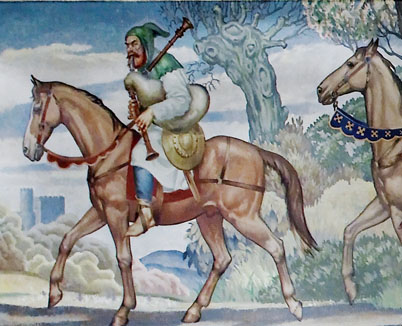
The Miller from the Canterbury Tales can physically be described as a large, built man with red hair. He is a very boisterous man, and can also be discribed as being dishonest, especially involving his job. He is a bit of a story teller, and is fond of wrestling.
http://www.sparknotes.com/lit/canterbury/characters.html
The Miller from the Canterbury Tales can physically be described as a large, built man with red hair. He is a very boisterous man, and can also be discribed as being dishonest, especially involving his job. He is a bit of a story teller, and is fond of wrestling.
Wednesday, September 12, 2012
The Reality of our Generation's American Dream
I remember my main goal in life when I was a kid was to be wealthy and successful. Material objects came to mind when my elementary school teachers would ask the same questions of how we pictured ourselves as adults, but I never thought that my goal was quite irrational until I started growing up. Of course, my hopes have changed since then, and it’s obvious that wealth isn’t the only dream worth having, and nor is it the most plausible. I was just a naïve child at the time, so I understand my lack of judgment, but I still see unrealistic dreams amongst people my age, and from people even older. The media has illustrated a whimsical life of wealth that contrasts with the reality of the recession which we are barely recovering from. Due to our economic instability, it is necessary that we change our dreams to something that is more in our reach. Personally, my “America Dream” is to have a steady career, to be able to get a full education, and to do better economically than my parents have. However, according to the article “Generation Screwed” and “Is the Onslaught Making Us Crazy”, my dreams might be farther from my reach that I believed.
What many people think is that a college diploma will automatically guarantee them a better life. It’s supposed that having a degree will ensure a more stable, high-paying career, but as said by the Heldrich center for workforce development, “over 43 percent of graduates now working are at jobs that don’t require a college education”. Those numbers equate to more than two out of every five college graduates, meaning that almost half of college graduates are competing with non-graduates for jobs that they are already overqualified for. To me, this means that there’s a 43 percent change that I won’t have a steady-paying job like I anticipate. On the other hand, it does not mean that I have to avoid pursuing an education, or even at all. The unemployment rate for non-graduates is much higher than that of people of the same age with degrees, and non-graduates are qualified for fewer jobs than graduates are, so having an education is still evidently superior.
Furthermore, funding a higher education is a problem for adults all over the country. With tuition hikes over the last decade, it is coming close to us having to choose between books or meals. It seems obvious to want to sign up for student loans and credit cards, but with the nationwide tuition debt piling up to one trillion dollars, according to “Generation Screwed”, I might have to look for other ways to pay for my tuition. With the lack of guaranteed employment upon graduation, many are at fault with their loans and bills, and fall deep into debt. I take this as a lesson, in which I need to look into as many scholarships as I can in order to ward off the debts that potentially follower with going to college.
On a different light, economic prosperity may not seem as rewarding as it seems, depending on what you put your money towards. After paying bills, rent, and necessities, most Americans turn to technology and gadgets for entertainment as a way with keeping up with our internet-fueled generation. However, it may actually be that we are funding our own stress and anxiety by focusing on technology and networks. According to Tony Dokoupil, our use of the internet is skyrocketing, and is conversely changing the ways we think and feel. This made me think twice about setting high economic goals, or at least how I choose to spend it, because it seems almost pointless if I am going to spend it on technology that could potentially lead me to psychosis. Creating goals more oriented in helping others or my community seems more worthwhile than being led down the destructive path that social networks have paved.
To conclude, the American dream has greatly shifted in the past few decades, and it is vital to recognize that. Our economy is not as prosperous as it was before, and dreams such as owning a house and having a family are not as easily obtainable as they were long ago. This not only means that we must work to our best abilities in order to succeed. What this means is that even if we put in twice as much effort as before, our success will still not be promised to us. The articles “Is the Onslaught Making Us Crazy” and “Generation Screwed” provided a bitter reality of my generation which helped me realize that I need to change my American Dream to fit into the ways of today.
Tuesday, August 28, 2012
How Colleges and Unniversities are Teaching a Harsh Lesson of Reality
At the end of our junior year in high school, the majority of us are excited to finally embark on our last year of high school. However, our ambitions and goals vary from person to person, one of the most important being to go on to a higher form of education, which is college. In our day and age, getting into a college is highly competetive, and standing out in order to get accepted is difficult when there are likely thousands of other students applying to the same schools that you are. The likely answer would to gain both education and experience by taking difficult classes (such as AP or honors), which display to colleges that one is both responsible and capable of taking on an education at a college or university level. On the otherhand, a schedule such as this could be overwhelming for a senior, especially after already spending twelve years in school, and only having a few months before graduation. Senior year is a person's life when they are stuck between their childhood and becoming an adult, and many would choose to still behave like a child while still getting rewarded like an adult. Colleges have caught onto this pattern, and fairly teach them a lesson that the choices you make have consequences that can cost you much more than they ever did in your childhood.
The term often used as "senioritis" is far from just a myth for the majority of seniors. It's difficult to balance our dreams of what a high school year should be like, mainly because in movies, the last year in high school year is depicted is being effortless and very enjoyable. Seniors often apply to colleges with a list of challenging classes in order to impress them and gain their attention, however many of them either drop out of the class or fail out after the college had already sent them a letter of acceptance. Does this mean that the student is accepted anyways? Most colleges would say "no", and that the student did not prove what he/she had promised, which means that he/she doesn't get what the college had promised. To begin, students that are willing to let their grades drop in high school are more likely to do the same while they are in college, and it would be foolish of a college to waste their time on a student that would eventually just become a drop-out. A higher education is both expensive and not available to everyone, and there is always someone more prefereable to take that person's place. Furthermore, a letter of acceptance isn't valid until the high school diploma has been earned, so if a student had failed a class that was necessary to graduate, but had already been accepted into a university, that acceptance would be invalid.
The reality that teenagers try to ignore is that their childhood is coming to a slow end, and that along with their approaching adulthood comes an obligation to work harder, not only to succeed, but to survive in general. In reality, now choosing between school work or friends is the difference between choosing a life of minimum wage or a life guided by a higher education, which entitles a more stable, higher-paying career after receiving a diploma. After living through a recession, it's evident that a high school diploma alone is not enough to sustain a life above the poverty level, and colleges are more crowded that ever because of this. Although is may be preferable to take the easy way out, no one will ever be able to realize the amount of intelligence or experience someone has if that person were to never reach out to succeed. For example, we can examine an person that takes part in a sport (such as track) and is physically in shape, but doesn't apply themself by practicing like the rest of their teammates do. It is highly unlikely that he/she would be able to prosper by talent, rather than relying on their gains they received from practicing (such as a better endurance, lower body fat, etc.). Relatively, the same would apply on an educational level, for students that have always done the "bare minimum" just to progress towards their high school diploma. It is now that our organizational skills, priorities, and acts of taking initiative shine over the numerous people that only have intelligence but lack ambition.
In conclusion, the act of colleges revoking letters of acceptance after students let their grades fall in their senior year is just an act of showing the true, bitter ways of the world. In our senior year, it is key to not only rely on knowledge, but to put forth effort and make decisions that we never had to necessarily make before, such as choosing between good grades and leisure time. Colleges would rather accept a student that displays both ambition and a potential for growth, because more often that not, these are the people that succeed in our society. Although there an idead that during our senior year, we need to enjoy ourselves as much as possible before we graduate, the fact of the matter is that this is the time when we need to try our hardest in order to prepare ourselves for our future that lies less than a year ahead of us. If colleges were to allow us to slack off during this crucial time in our life,it would not only teach us a lesson that is detrimental to everything we have learned and predicted that college would be like, but it would set an example that our entire adult life would be that way. This is nothing less than far from the truth, and by making us work hard during our senior year, colleges teach us our first lesson of the real world: that the actions we make as adults have real consequences.
The term often used as "senioritis" is far from just a myth for the majority of seniors. It's difficult to balance our dreams of what a high school year should be like, mainly because in movies, the last year in high school year is depicted is being effortless and very enjoyable. Seniors often apply to colleges with a list of challenging classes in order to impress them and gain their attention, however many of them either drop out of the class or fail out after the college had already sent them a letter of acceptance. Does this mean that the student is accepted anyways? Most colleges would say "no", and that the student did not prove what he/she had promised, which means that he/she doesn't get what the college had promised. To begin, students that are willing to let their grades drop in high school are more likely to do the same while they are in college, and it would be foolish of a college to waste their time on a student that would eventually just become a drop-out. A higher education is both expensive and not available to everyone, and there is always someone more prefereable to take that person's place. Furthermore, a letter of acceptance isn't valid until the high school diploma has been earned, so if a student had failed a class that was necessary to graduate, but had already been accepted into a university, that acceptance would be invalid.
The reality that teenagers try to ignore is that their childhood is coming to a slow end, and that along with their approaching adulthood comes an obligation to work harder, not only to succeed, but to survive in general. In reality, now choosing between school work or friends is the difference between choosing a life of minimum wage or a life guided by a higher education, which entitles a more stable, higher-paying career after receiving a diploma. After living through a recession, it's evident that a high school diploma alone is not enough to sustain a life above the poverty level, and colleges are more crowded that ever because of this. Although is may be preferable to take the easy way out, no one will ever be able to realize the amount of intelligence or experience someone has if that person were to never reach out to succeed. For example, we can examine an person that takes part in a sport (such as track) and is physically in shape, but doesn't apply themself by practicing like the rest of their teammates do. It is highly unlikely that he/she would be able to prosper by talent, rather than relying on their gains they received from practicing (such as a better endurance, lower body fat, etc.). Relatively, the same would apply on an educational level, for students that have always done the "bare minimum" just to progress towards their high school diploma. It is now that our organizational skills, priorities, and acts of taking initiative shine over the numerous people that only have intelligence but lack ambition.
In conclusion, the act of colleges revoking letters of acceptance after students let their grades fall in their senior year is just an act of showing the true, bitter ways of the world. In our senior year, it is key to not only rely on knowledge, but to put forth effort and make decisions that we never had to necessarily make before, such as choosing between good grades and leisure time. Colleges would rather accept a student that displays both ambition and a potential for growth, because more often that not, these are the people that succeed in our society. Although there an idead that during our senior year, we need to enjoy ourselves as much as possible before we graduate, the fact of the matter is that this is the time when we need to try our hardest in order to prepare ourselves for our future that lies less than a year ahead of us. If colleges were to allow us to slack off during this crucial time in our life,it would not only teach us a lesson that is detrimental to everything we have learned and predicted that college would be like, but it would set an example that our entire adult life would be that way. This is nothing less than far from the truth, and by making us work hard during our senior year, colleges teach us our first lesson of the real world: that the actions we make as adults have real consequences.
Monday, August 27, 2012
Aspirations for My Senior Year
After spending twelve years (eleven if you don't include pre-school) of my life dedicating 180 days of each year towards school and my education, all of my efforts are finally starting to show it's product. In less than one year, I'll be crossing the stage along with many of my peers that I have grown up with, and have changed with throughout the years. We all have one thing in common, which is that none of us have lost sight of earning one of the most important achievements there is to earn in these days: a high school diploma. I suppose not all of us haven't followed a perfect route to this goal, but I think that's one thing that has really made each one of us original and unique. It's amazing to see how much each one of us have progressed so much from the young freshmen we once were, including myself. I remember first starting here at SSFHS and having little to no aspirations or plans for my futures, which was odd because I had done exceptionally well in middle school (I promoted with a 4.0 throughout the entire three years I was there). Perhaps it was mainly the people I surrounded myself with that made this effect on me, none of them really had the ambition or motivation to do well in school, and even today, very view are doing well with it, if they are even still in school at all.
This is the year that I'm finally taking initiative and setting the bar high in order to reach my dream career (I hope to either work in the medical-anthropology field or something along the lines of being a teen-doctor). However, from the end of my freshman year up until now, I have been progressing to the choices that I am now making this year. I decided to take two AP classes (calculus and biology), and to focus more on what I can do to help my community (along with that, trying to find ways to help the world as a whole). I've always had a more "radical" approach on different topics, such as feminism, animal rights, racial equality, etc. and I've been trying my best to share my views with the rest of the world. From the time when I first started making realizations about "the way things are" and began determining my ethics, I mainly alienated myself from the things I viewed as "wrong", rather than trying to find ways to stop it. This year, and I hope to continue with this for the rest of my life, I'm striving to bring awareness to these topics and inform others in ways they can stop bullying, harassing, or creating a prejudice/stereotype. What many teens don't understand is that there are really simple things that they can change in their life/lifestyle that could create much less harm than they currently are (such as their vocabulary, for example, using racial/sexual slurs). I often bring up these topics up in a casual way with my friends/peers, and most of them are able to see things from my point of view.
Furthermore, I've set a fitness/health goal for myself, that I've been continuing since the summer. It's really difficult to balance, school, exercise, and hanging out with friends, so I've mainly been participating in the first two. Lately, I've just been going to school and working out on the weekdays, and volunteering at the library and working out on the weekends. It's probably not something that most people would look forward to, but for the most part, I enjoy what I am doing right now, and I know that there are many good rewards to come from working hard. I usually spend my leisure time going to "shows", which are somewhat like concerts, but on a much smaller scale, and involve underground music. I'm laughed right now while re-reading the beginning of this paragraph and realized that the quote "all work and no play makes Jack a dull boy" has really defined my lifestyle right now, and it's hard to argue that I don't feel stressed out often. Going to shows is my catharsis, and I think it balances out all the stress I'm embedded in throughout the school-week.
This is the year that I'm finally taking initiative and setting the bar high in order to reach my dream career (I hope to either work in the medical-anthropology field or something along the lines of being a teen-doctor). However, from the end of my freshman year up until now, I have been progressing to the choices that I am now making this year. I decided to take two AP classes (calculus and biology), and to focus more on what I can do to help my community (along with that, trying to find ways to help the world as a whole). I've always had a more "radical" approach on different topics, such as feminism, animal rights, racial equality, etc. and I've been trying my best to share my views with the rest of the world. From the time when I first started making realizations about "the way things are" and began determining my ethics, I mainly alienated myself from the things I viewed as "wrong", rather than trying to find ways to stop it. This year, and I hope to continue with this for the rest of my life, I'm striving to bring awareness to these topics and inform others in ways they can stop bullying, harassing, or creating a prejudice/stereotype. What many teens don't understand is that there are really simple things that they can change in their life/lifestyle that could create much less harm than they currently are (such as their vocabulary, for example, using racial/sexual slurs). I often bring up these topics up in a casual way with my friends/peers, and most of them are able to see things from my point of view.
Furthermore, I've set a fitness/health goal for myself, that I've been continuing since the summer. It's really difficult to balance, school, exercise, and hanging out with friends, so I've mainly been participating in the first two. Lately, I've just been going to school and working out on the weekdays, and volunteering at the library and working out on the weekends. It's probably not something that most people would look forward to, but for the most part, I enjoy what I am doing right now, and I know that there are many good rewards to come from working hard. I usually spend my leisure time going to "shows", which are somewhat like concerts, but on a much smaller scale, and involve underground music. I'm laughed right now while re-reading the beginning of this paragraph and realized that the quote "all work and no play makes Jack a dull boy" has really defined my lifestyle right now, and it's hard to argue that I don't feel stressed out often. Going to shows is my catharsis, and I think it balances out all the stress I'm embedded in throughout the school-week.
Subscribe to:
Posts (Atom)